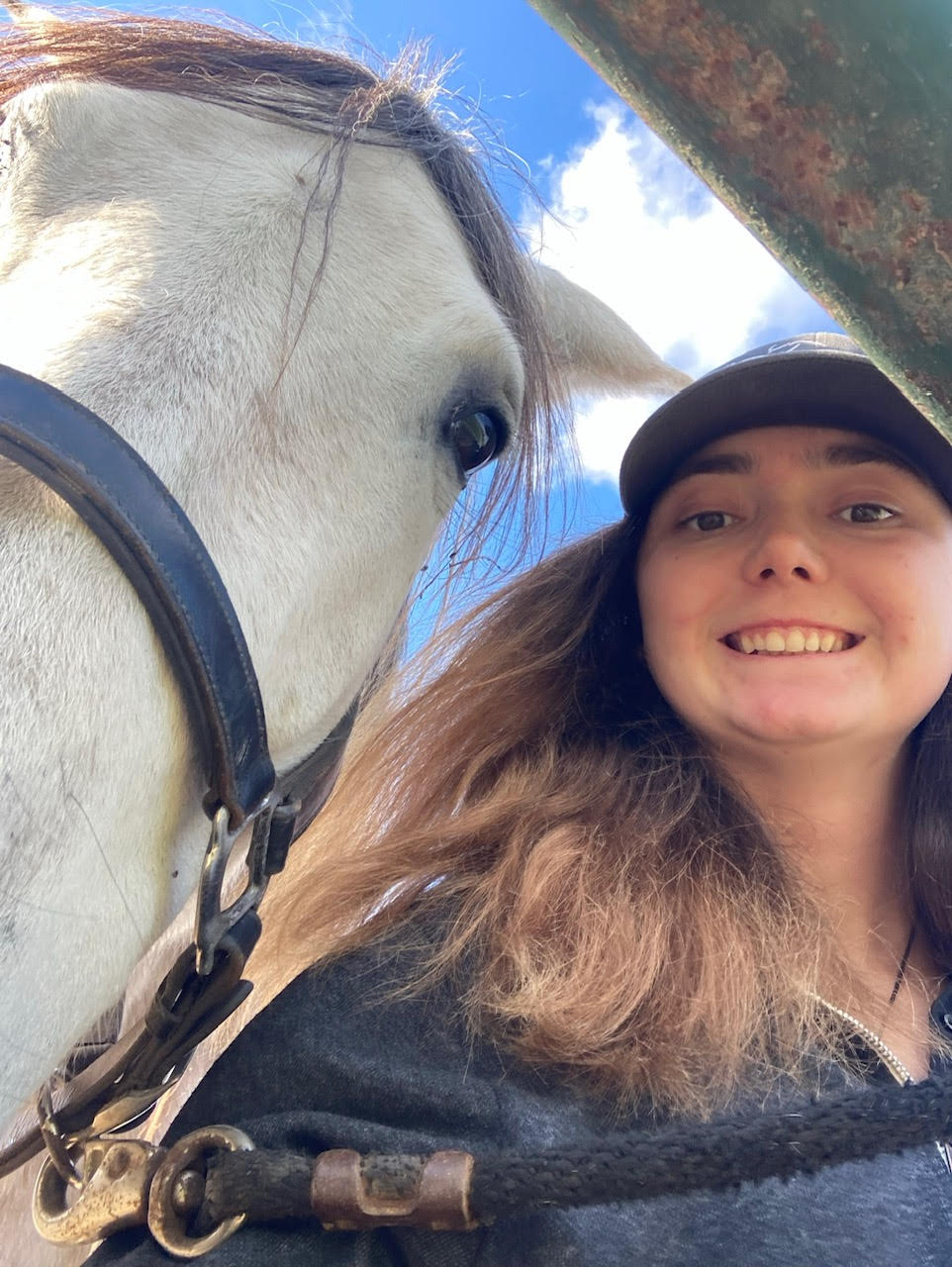
Writing and horses…any connection there?
There is definitely a connection between writing and my equine activities. I sat on my first horse when I was about 4 and continued for the next 17 years. As a child, I always used to fantasize about being this big-time trainer with a ton of horses and clients. Of course, I know now how expensive horses actually are and how unrealistic my dreams were, but these fantasies were what sparked my interest in writing because I had no way of voicing these dreams so they became stories.
Many of my stories contain an equine aspect as it is a topic I am very familiar with and enjoy writing about.
When and how did you get the “writing itch?” Are / were any family members, writers? Did you have a love affair / was fascinated by words at a very young age? Were there any events, such as school awards or positive reactions to something you wrote, that boosted your self-confidence as a writer?
As far as a big inspirational story that sparked my “writing itch” I don’t have one. As a kid, I always had a book in my hand. I’d rather sit on the porch and read a book than head over to the neighbors and play. That being said, the neighbors were also half a mile down the road on another farm. I grew up most of my childhood in Ottawa, Illinois before moving to Naperville in the middle of third grade.
I did have this drive in high school that lasted for about 3 months where I just couldn’t put down my pen. Every class I was writing, even in my automotive class I was focused on an early book of mine. Never in my life had I ever felt anything like it. It was like I was there, in my own story, living through the eyes of my characters. It seemed to have died down after I finished and abandoned the book, but now and again I will get that extreme itch, but it never lasts as long as it once had.
In school, I was never one to express my writing to anyone. I took a couple of writing classes and had my own stories going on in the background, but my main extracurricular focus was music and horses. I entered college as a Music Education major, developing relationships with orchestra teachers across the country. It was only when COVID hit two years ago that I began to further develop my writing career.
Authors…who speaks to you; who inspires you?
As a child, my all-time favorite author was Erin Hunter. She wrote and continues to write the series “Warrior Cats.” Her books were the reason I began writing stories of my own. She knew just the right words to use to lead you into the woods where the cats dwelled. Of course, the name Erin Hunter is just a pen name used by Victoria Holmes, Kate Cary, Cherith Baldry, Inbali Iserles, Tui T. Sutherland, and Rosie Best, but as a kid—and even now—I believe Erin Hunter was the best children’s author of all time.
When and/or how did your current novel begin to take shape in your mind?
I talked about my first novel (the one I abandoned) in high school, but I knew that one was never going to be anything other than a good idea. The novel that I aspire to get published and out there into the world began about two years ago at the beginning of COVID. Some of the characters in the novel are inspired by my music teachers at the College of Dupage. A friend once told me that most writers develop their characters based on real people in their lives and I couldn’t think of better choice of real life influences.
This novel is a slowly developing story meant to draw the audience slowly and subtly into the lives of the characters. When I first started thinking about this book I wanted the main conflict to be something that a lot of people can relate to—dealing with loss.
Have you lived or spent a lot of time in a college town or on or around college campuses? Does the academic world hold a particular attraction for you?
I spent my first two years at the College of Dupage as a music major with a minor in writing. In attending this college I commuted and spent the rest of my time working two jobs. The next year and a half I spent at Elmhurst University taking online classes due to the pandemic. It is only during my last semester at EU that I get to experience life at a University. That being said, I very much enjoy the academic world and cannot see myself stopping anytime soon. Some people can’t wait to graduate and get out of the classroom, but I enjoy sitting down, listening to the stories of the past and looking forward to what has yet to come.
How has it been for you personally, working on your first novel? What has it been like to break the ice and do some serious writing; getting in the zone and tapping into your imagination? Have you always preferred fiction to nonfiction? Do other genres interest you…screenplays, poetry, song lyrics, plays, etc.
Personally, working on my first novel is hard. There are so many ways that it can go, so many paths for my characters to take and I have to choose the right one that my audience and I will enjoy. The topic and theme of my writing is always of a serious nature. Non-fiction has never been much of an interest of mine, mostly because I am a dreamer. Every experience I have had, there is always a spot in the back of my head where I imagine all the different ways that it could have gone, and sometimes they can be extremely unrealistic.
My interest in other genres is minimal. I’ll mess around with some poetry and screenplays, but they never capture my full attention.


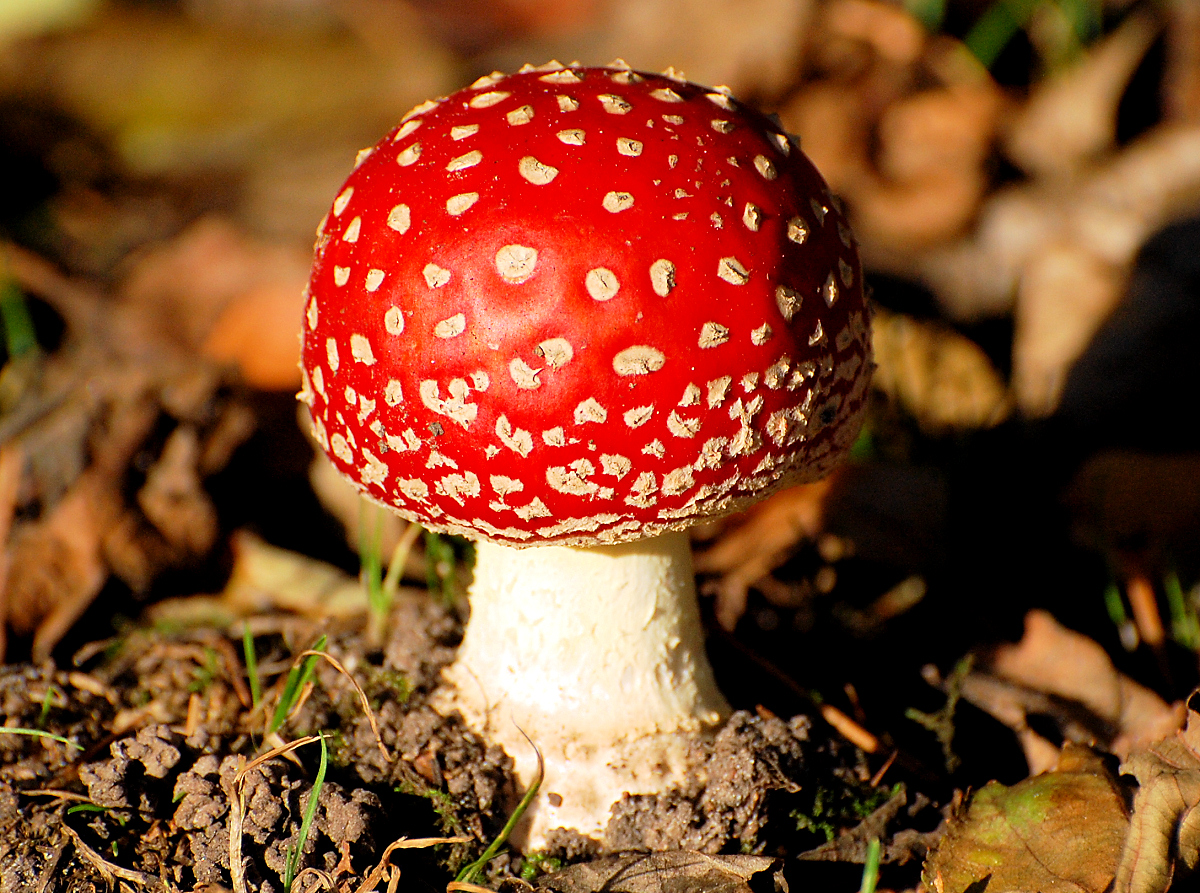 Renowned Writer Tripped on Magic Mushrooms…